
This page was written, edited, and reviewed & approved by Rusty Smith following our comprehensive editorial guidelines. Rusty Smith, the Founding Attorney, has 25 years of legal experience as a personal injury attorney. Our last Published date shows when this page was last updated & reviewed.
An Oklahoma car accident lawyer takes over the legal work after a crash, including the investigation, the insurance negotiations, and the filing deadlines. If your phone keeps lighting up with adjuster calls while medical bills stack up on the kitchen table, feeling confused and worn down makes complete sense. Many people have never worked with a lawyer before, so it is hard to picture what one would actually do for you.
Knowing what happens next can lift some of that weight. At Smith Barkett Law Group, our Oklahoma car accident lawyers explain each step in plain language, so you and your family can decide with a clear picture. When you're ready, you can reach out for a free case evaluation and ask us anything on your mind.

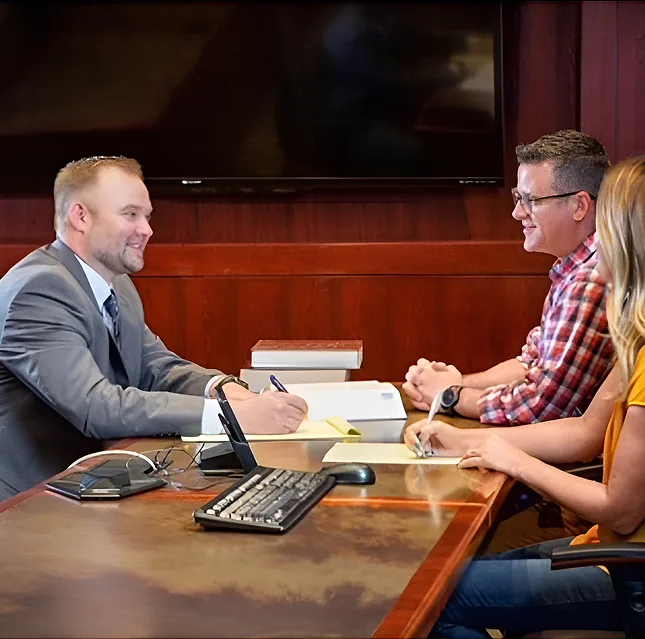
Your recovery comes first, and the legal work should never compete with it. We handle the paperwork, phone calls, and deadlines so you can focus your energy on treatment and family. A claim usually moves through the following stages:
Not every claim passes through every stage, and the pace depends on your injuries and the insurer's response.
Evidence starts to disappear sooner than most people expect. Skid marks fade, vehicles get repaired, and witnesses forget details. We act early to preserve the facts while they still exist.
Under 47 O.S. § 10-107 (O.S. stands for Oklahoma Statutes), a driver in a crash that injures or kills anyone must report it immediately by the quickest means available. Depending on where the crash happened, you report it to local police, the county sheriff, or the nearest Highway Patrol office. We then request the official collision report and check it for errors or missing witnesses.
Beyond the report, we look for evidence such as the following:
Together, these pieces help show how the crash happened and who caused it.
Many crashes involve more than one insurance policy. We review the at-fault driver's liability coverage, any business policy covering a work vehicle, and your own auto policy.
The other driver may carry only the minimum insurance every driver in the state must carry. We also check your policy for uninsured motorist coverage, which may apply when the at-fault driver lacks enough insurance.
Claims involving a government vehicle follow stricter rules. Under 51 O.S. § 156, a claim against the state or a political subdivision is forever barred unless you present notice within 1 year after the loss. The statute defines a political subdivision as including municipalities, school districts, and counties.
Your medical records tell the story of your injuries. Under 76 O.S. § 19, patients are entitled to copies of their medical records and bills upon request and payment of the listed copying costs. Our team gathers those records as treatment continues, so the claim reflects your full treatment history.
Some losses never appear on a hospital bill. We track economic damages, such as lost wages and future medical care, with pay stubs, work notes, and doctors' opinions. Your pain, sleepless nights, and missed family moments matter too, so we document how the injuries have changed your daily life.
If you are still weighing whether you need a lawyer when the crash was not your fault, a short conversation can help. Call Smith Barkett Law Group at 918-582-6900 for a free case evaluation, and we will talk through your situation.
Adjusters often call within days of a crash, and friendly-sounding questions can still shape how your claim is valued. Once we represent you, those calls, letters, and requests for recorded statements come to our office instead of to you. You can rest and attend appointments without worrying about saying the wrong thing.
Insurers sometimes argue that you were careless too, even when the other driver clearly caused the crash. Under 23 O.S. § 13, your own negligence, or lack of reasonable care, does not bar recovery unless it is of greater degree than the negligence of those who caused the damage. We answer fault arguments with the evidence gathered early in the case.
Once your treatment shows the full picture, we present the claim with supporting records and explain each offer in plain terms.
A lawsuit is a tool, not a threat, and we talk through its benefits and risks with you before filing. Filing can also uncover evidence the other side would not share voluntarily.
Most car accident injury claims fall under 12 O.S. § 95(A)(3), part of the state's statute of limitations. It sets a 2-year limit for an action for injury to another's rights that does not arise from a contract. That period runs from when the cause of action accrues, or legally arises, and the statute bars filing afterward.
We identify that date at the start of your case and track it while negotiations continue, since filing on time keeps your options open.
After you file a lawsuit, both sides exchange information through a process called discovery. Under 12 O.S. § 3226, the tools include depositions, where people answer questions in person; interrogatories, or written questions; document requests; physical and mental examinations; and requests for admission. We use these tools to obtain records the other side controls, and we prepare you for your own deposition.
If your case reaches trial, a jury may decide it. The Oklahoma Constitution's jury provision calls for 12 jurors in civil cases involving more than $10,000, and three-fourths of the jurors can return a verdict. In practice, at least nine of 12 jurors must agree, not all of them.

Hiring a lawyer does not mean handing over control of your case. The state's Rules of Professional Conduct, the ethics rules for lawyers, draw clear lines that protect you.
We handle car accident cases on a contingency fee basis, so our fee is a percentage of any recovery rather than an upfront bill. If you are comparing firms, these tips on choosing a personal injury lawyer can help.
Under Rule 1.5(c), the state bar's guidance on written fee agreements explains that a contingent fee agreement must be in writing and signed by you. It must state the lawyer's percentage if the case settles, goes to trial, or is appealed. It must also list deducted expenses, whether they come out before or after the fee, and any expenses you would owe whether or not you prevail.
Once an offer arrives, the final call is yours. Rule 1.2(a) of the Rules of Professional Conduct requires a lawyer to abide by the client's decision about whether to settle. We give you our candid assessment, and then we follow your decision.
Settlement checks go into a separate account, not the firm's own funds. Rule 1.15 of the Rules of Professional Conduct requires your lawyer to promptly notify you, promptly deliver the funds you are entitled to receive, and provide a full accounting when you ask.
Before distributing funds, we address any medical liens, which are legal claims against the recovery for treatment costs. Under 42 O.S. § 43, a hospital that treats someone injured in an accident can hold a lien on the recovery for its reasonable and necessary charges.
A state bar ethics opinion on contingency fees notes that Rule 1.5(c) also requires a written statement when a contingency fee case ends. That statement shows the outcome and, if you recover, the amount paid to you and how it was determined. Nothing about your recovery should feel like a mystery.
Families often bring these questions to their first conversation with us.
Ideally, call after you have received medical care and feel ready to talk. Early contact gives us time to request camera footage and witness statements before they disappear.
Bring the collision report number, photos, insurance cards, medical bills, and any letters from an insurer. If some items are missing, reach out anyway, and we can help gather them.
Generally, yes, because 12 O.S. § 2502 lets you refuse to disclose, and prevent others from disclosing, confidential communications made to obtain legal services. That protection allows you to speak openly with us.
Yes. We review what you said, correct any misunderstandings with evidence, and handle all insurer communication from there on.
Insurers sometimes blame your symptoms on older conditions. We compare earlier records with your post-crash treatment to show what changed after the collision.
Not necessarily. Many claims are resolved through negotiation, and we discuss the benefits and risks of a lawsuit with you before taking that step.
Knowing what a lawyer will handle, from the collision report to the final closing statement, can make the next phone call feel less daunting. You do not need to have every answer before you reach out.
Our attorneys have more than 75 years of combined litigation experience. We handle car accident claims on a contingency fee basis and meet with clients at our Tulsa office.
From the first conversation, we explain your options in plain language and respect your decisions about your case. Call 918-582-6900 or visit our contact page to schedule your free case evaluation.
"*" indicates required fields

