Learn how wrongful death claims work after a fatal car accident in Oklahoma, who is allowed to file, and the deadlines that protect your family's rights. Smith Barkett Law Group can help. Call 918-395-6825 today.
When a car accident takes someone you love, Oklahoma law lets close family members bring a wrongful death claim to seek accountability. If you are reading this in the raw days after a fatal crash, the grief is heavy enough without a maze of legal questions piled on top. You do not have to sort through it alone, and understanding a few core rules can help you protect what matters most.

A wrongful death claim is a civil case that a family brings when a loved one dies because of someone else's negligence. Negligence means a failure to use the reasonable care that a careful driver owes to everyone else on the road. When a fatal crash stems from that kind of carelessness, the law gives the family a way to seek accountability.
These claims differ from an ordinary car accident case in one painful respect. The person who was harmed can no longer speak for themselves, so the law allows their family or estate to pursue the claim on their behalf. The purpose is accountability and support for those left behind.
A wrongful death claim after a car accident in Oklahoma is also separate from any criminal case the state might file against the driver. Prosecutors handle criminal charges on their own timeline, and a conviction is never required for your family to move forward. Our team focuses on the civil claim, where your family's losses and rights take center stage.
The law does not let just anyone file this kind of case. The personal representative of the person who died, often named in a will or appointed by the court, usually brings the claim. When no personal representative has been appointed, a surviving spouse or next of kin may file instead.
The personal representative acts for everyone who suffered a loss, not for their own benefit alone. That structure keeps a single case organized while still recognizing the distinct loss each family member carries.
A financial recovery is meant to support the people closest to the person who died:
Deciding who should serve as personal representative and who qualifies as a beneficiary can feel overwhelming, and we walk families through each step.
Every wrongful death claim rises or falls on proving that another party's negligence caused the crash. Fault is rarely handed to a family; it has to be built from evidence. Our team investigates the scene, secures the crash report, reviews any available video, and brings in reconstruction experts when the cause is disputed.
Insurance companies start building their side within hours, and their goal is to limit what they pay. Because of that, we move quickly to preserve skid marks, vehicle data, and witness memories before they fade. Solid evidence is what turns a grieving family's account into a claim that an insurer or jury cannot brush aside.
Fatal collisions often trace back to a handful of dangerous choices behind the wheel. Recognizing them helps families understand where fault may lie:
Each of these points to a driver who owed a duty of care and broke it, and each shapes how we approach the claim.
Oklahoma follows a legal doctrine known as modified comparative negligence, and this rule applies directly to fatal crash claims.
Under state law, your family can still recover compensation as long as the person who died was not more at fault than the opposing driver (i.e., their share of fault is 50% or less). If the deceased is found partly responsible, any financial recovery is reduced proportionally by their percentage of fault. However, if their fault is found to be greater than the other driver's, the claim is barred entirely.
Insurers understand this rule well and frequently try to shift blame onto the person who passed away. We counter those tactics with rigorous evidence that keeps the focus where it belongs: on the other driver's negligence.
After a fatal crash, the other driver's insurance company often reaches out with sympathy and a fast offer. That early call is rarely in your family's best interest. An initial offer is usually calculated to close the claim before anyone grasps the full scope of the loss.
Adjusters may request recorded statements, ask for broad access to records, or suggest the person who died shared the blame. Each move is designed to reduce what the insurer pays. We handle these conversations for families, so a grieving spouse or parent never has to negotiate against a trained adjuster alone.
Our team also reviews every policy that might apply, including the at-fault driver's coverage and any underinsured motorist coverage your family carries. Uncovering all available coverage is often what separates a token offer from a resolution that reflects the real loss.
Time is one of the most important factors in any fatal crash case. Under Oklahoma's wrongful death statute, a wrongful death action must be commenced within two years of the date of death. Miss that window, and the court can dismiss the case no matter how strong the evidence is.
Two years can slip away quickly while a family is grieving and settling an estate. Evidence fades during that time as well, as vehicles are repaired or scrapped and witnesses move on. For those reasons, we encourage families to reach out early, so we can protect both the deadline and the proof the claim depends on.
Certain actions in the weeks after a fatal crash can strengthen a claim or, if missed, weaken it. A few steps make a real difference:
No family should have to juggle these tasks while grieving, and we take that weight on so you can focus on each other.
Families often bring us these questions after losing a loved one in a fatal crash.
The personal representative is usually named in the will or appointed by the court, and files the claim on behalf of all surviving family members.
Possibly. Under the state's comparative negligence rule, your family may still recover if the person who died was not more at fault than the other driver.
We look to your own underinsured motorist coverage, which often provides a source of recovery when the at-fault driver's policy falls short.
No. A wrongful death claim is civil and separate, so it can move forward whether or not the driver is ever charged or convicted.
Yes. A single claim can address the losses of a surviving spouse, children, and other next of kin, each recognized separately under the law.
Trucking cases often involve the driver, the company, and federal safety rules. Our team investigates every party that may share responsibility for the loss.
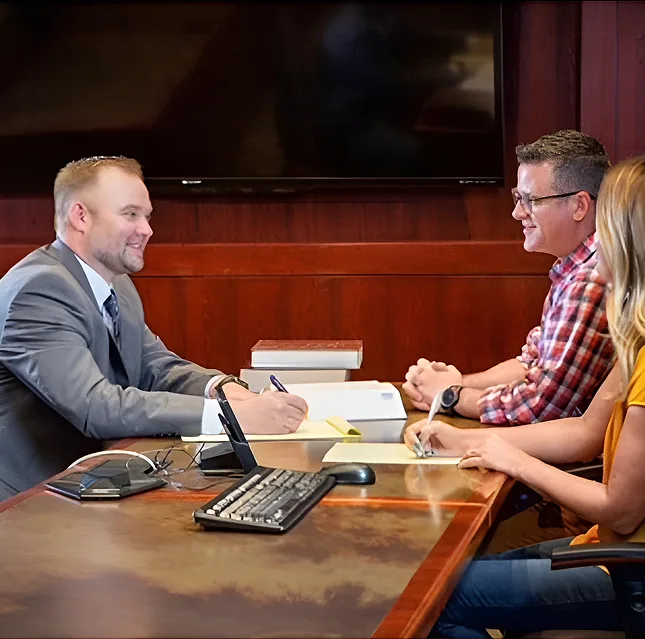
With only two years to file and evidence fading by the day, the period after a fatal crash is no time to face insurance companies alone. If your family lost someone because another driver was careless, you deserve steady guidance and a team that treats your loss with respect.
Our attorneys bring more than 75 years of combined litigation experience to fatal crash claims, and we handle the investigation, paperwork, and insurers so your family can grieve. We work on a contingency fee basis, which means you owe no attorney fee unless we recover for you.
Reach out for a free case evaluation and let us protect your family's rights while you focus on healing. Call us today at 918-395-6825 to speak directly with our team.
"*" indicates required fields