
This page was written, edited, and reviewed & approved by Rusty Smith following our comprehensive editorial guidelines. Rusty Smith, the Founding Attorney, has 25 years of legal experience as a personal injury attorney. Our last Published date shows when this page was last updated & reviewed.
An Oklahoma amputation injury lawyer can help you pursue compensation when someone else's negligence cost you a limb, hand, foot, or finger. Losing part of your body changes how you work, move, and picture your future. It is normal to feel shocked, angry, or unsure how your family will manage the bills and the months ahead.
At Smith Barkett Law Group, we help amputation survivors and their families across Oklahoma understand their legal options and document the costs that can follow an amputation for years. You do not have to sort through insurance calls, medical bills, and filing deadlines alone. Call 918-582-6900 for a free case evaluation.

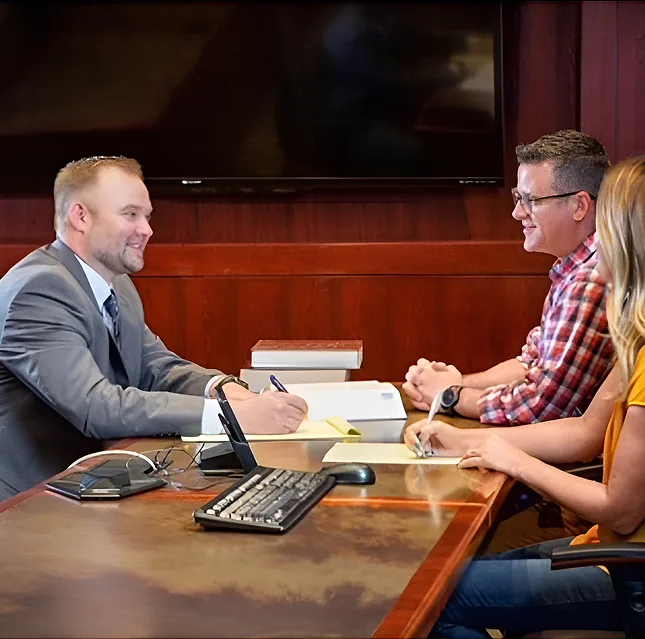
Amputations are among the most serious cases our Oklahoma catastrophic injury lawyers handle. Your claim has to account for the years ahead, including prosthetic care, lost earning ability, and changes to daily life.
Our lawyers bring more than 75 years of combined litigation experience. Founding attorney Michael Barkett has tried over 80 jury trials to verdict, and founding attorney Rusty Smith brings 25 years of civil litigation experience.
Our results include a $1.2 million catastrophic injury settlement, a $5.9 million industrial wrongful death settlement, and a $250,000 product liability settlement. Past results do not guarantee a similar outcome.
From our offices in Tulsa and Muskogee, we represent injured people throughout Oklahoma, and our Tulsa amputation injury lawyers handle cases across the Tulsa area.
Our work usually includes the following:
Amputation can feel isolating, but limb loss is more common than many people realize:
When an unsafe worksite, careless driver, defective product, or missed diagnosis causes an amputation, Oklahoma law may give you a claim.
Some amputations happen at the moment of injury, while others happen later, when doctors cannot save a crushed, burned, or infected limb.
Presses, conveyors, saws, augers, and oilfield equipment can catch a hand or arm in seconds when guards are missing, or lockout procedures are ignored. Under 29 CFR 1904.39, employers must report a work-related amputation to OSHA within 24 hours.
Violent collisions can crush or sever a limb, especially for motorcyclists, pedestrians, and people trapped inside a vehicle.
Power tools, lawn mowers, and industrial or farm machinery can cause amputations when a design flaw, manufacturing defect, or missing warning makes them unsafe. Under Kirkland v. General Motors Corp., an injured person must show the product caused the injury, the defect existed when it left the manufacturer's control, and the defect made it unreasonably dangerous.
A missed infection, blood clot, or circulation problem can lead to an amputation, and so can a surgical error. When substandard care causes a preventable amputation, you may have a medical malpractice claim.
Many injured workers assume workers' compensation is their only option, and the rules can feel confusing. Under 85A O.S. § 5, workers' compensation is usually your only remedy against your employer. The intentional tort exception is narrow: The employer must have acted with a willful, deliberate, specific intent to cause the injury.
Under 85A O.S. § 43, a workers' compensation claim does not affect your right to bring a claim against a third party for the injury. Depending on the facts, that third party may include the following:
If your employer or its insurer joins the third-party case, it may hold a first lien on two-thirds of the net proceeds to recover workers' compensation benefits paid or owed. As a separate civil case, a third-party claim can seek the full range of injury damages.
It is natural to worry about how you will pay for care that may last the rest of your life. The value of an amputation claim depends on its facts, including the following:
A 2007 study in the Journal of Bone and Joint Surgery projected lifetime health care costs of $509,275 for patients who underwent amputation after a limb-threatening injury.

Economic damages cover losses you can document with bills and pay records, such as:
Non-economic damages cover the personal toll of losing a limb, such as:
For injuries on or after September 1, 2025, 23 O.S. § 61.3 generally limits non-economic damages in bodily injury cases to $500,000. The cap does not apply when the jury or judge finds a permanent and severe physical injury, including loss of use of a limb or a substantial physical abnormality or disfigurement.
The cap also does not apply if the judge and jury find, by clear and convincing evidence, that the defendant acted in reckless disregard for others' rights. Gross negligence, fraud, and intentional or malicious conduct have the same effect.
For injuries before September 1, 2025, the Oklahoma Supreme Court's decision in Beason v. I.E. Miller Services, Inc. struck down the state's earlier cap on non-economic damages.
When a defendant's conduct goes beyond carelessness, 23 O.S. § 9.1 allows punitive damages. If the jury finds reckless disregard for the rights of others by clear and convincing evidence, the award cannot exceed the greater of $100,000 or the actual damages awarded. Higher limits apply when the defendant acted intentionally and with malice.
Insurers sometimes argue that you caused your own injury, which can feel unfair when you are already hurting. In a negligence case, 23 O.S. § 13 says your own negligence does not bar recovery unless it is of greater degree than the negligence of those who caused the harm.
Under 23 O.S. § 14, your recovery is then reduced in proportion to your share of fault. For example, if a jury assigns you 30% of the fault, your damages are reduced by 30%.
Proving negligence means showing that someone failed to use reasonable care and that this failure caused your amputation. Evidence can disappear quickly, especially when a machine is repaired or a vehicle is returned to service.
Useful evidence may include the following:
If you have the product that injured you, keep it unchanged.
Filing deadlines can feel like one more burden while you heal, but missing one can end a claim. The time limit depends on the type of claim:
Because investigations take time, it helps to talk with a lawyer well before any deadline.
Your case evaluation is free. If we take your case, we handle it on a contingency fee basis, and attorney fees come from a recovery under the terms of your signed agreement.
Yes, when the evidence supports them. Prosthetic limbs need fittings, repairs, and periodic replacement, and those future costs can be part of your economic damages.
Yes. OSHA's reporting rule treats fingertip amputations, with or without bone loss, as amputations, and losing part of a finger can affect your grip, fine motor skills, and work.
A delayed surgical amputation can still be part of your claim when the medical evidence ties it to the original incident. Crush injuries, severe fractures, burns, and infections sometimes leave surgeons with no other option.
Oklahoma requires only $25,000 in bodily injury coverage per person under 47 O.S. § 7-324, which may cover only a small part of an amputation's lifetime costs. We look for other sources, such as a commercial policy, another at-fault party, or your own uninsured or underinsured motorist coverage if you carry it.
Timelines vary with the injury, the parties involved, and whether the case settles or goes to trial. Many amputation cases take longer because prosthetic and therapy needs must become clear before anyone can value the claim. Oklahoma's filing deadlines keep running during that time.

You should not have to face insurers, employers, and manufacturers while you are learning to live with an amputation. An Oklahoma amputation injury lawyer at Smith Barkett Law Group can investigate what happened, look for every available insurance policy, and explain your options at each step.
Call 918-582-6900 or contact us online for a free case evaluation. We serve clients across Oklahoma from our Tulsa office at 2021 S. Lewis Ave., Suite 630, and our Muskogee office at 555 W. Okmulgee Ave.
"*" indicates required fields

